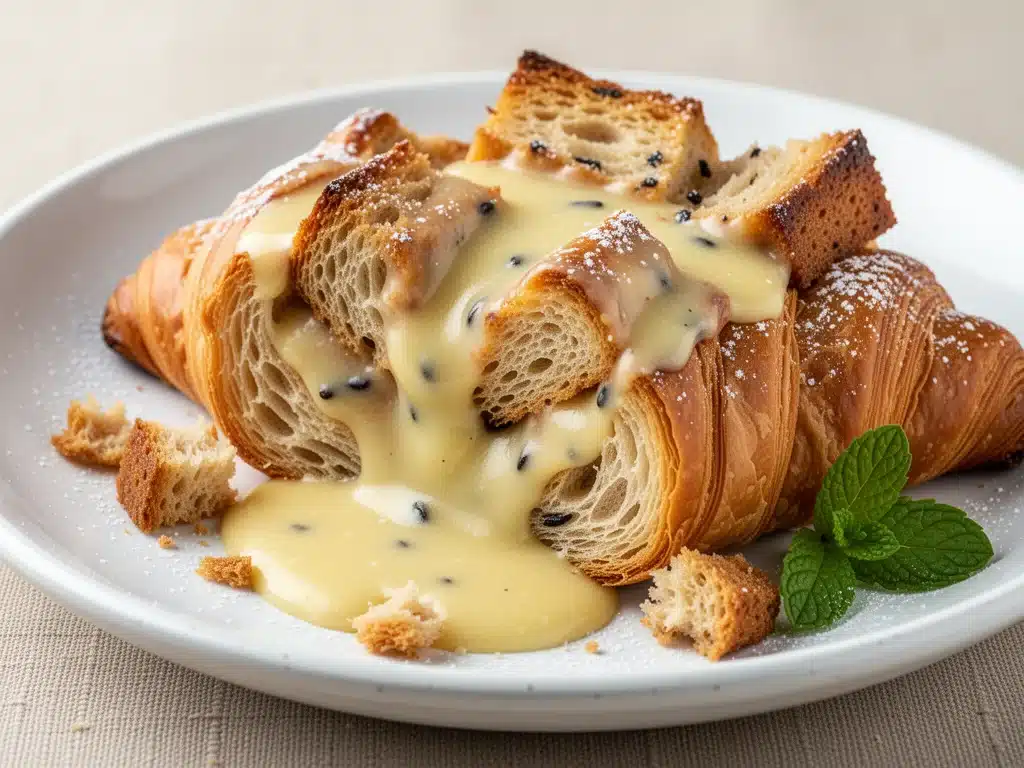
It was 7:00 AM on a Saturday, and I was standing in my kitchen holding a bag of day-old croissants like they were some kind of misunderstood orphan. You know the feeling. You bought them because they smelled like buttery heaven the moment you walked into the bakery. You ate one warm with your coffee, and the rest sat in the pantry for three days, slowly turning into sad, chewy bricks. Most people throw them away. I used to, too.
But then I made this flaky croissant bread pudding. And honestly? It changed how I view stale pastries forever.
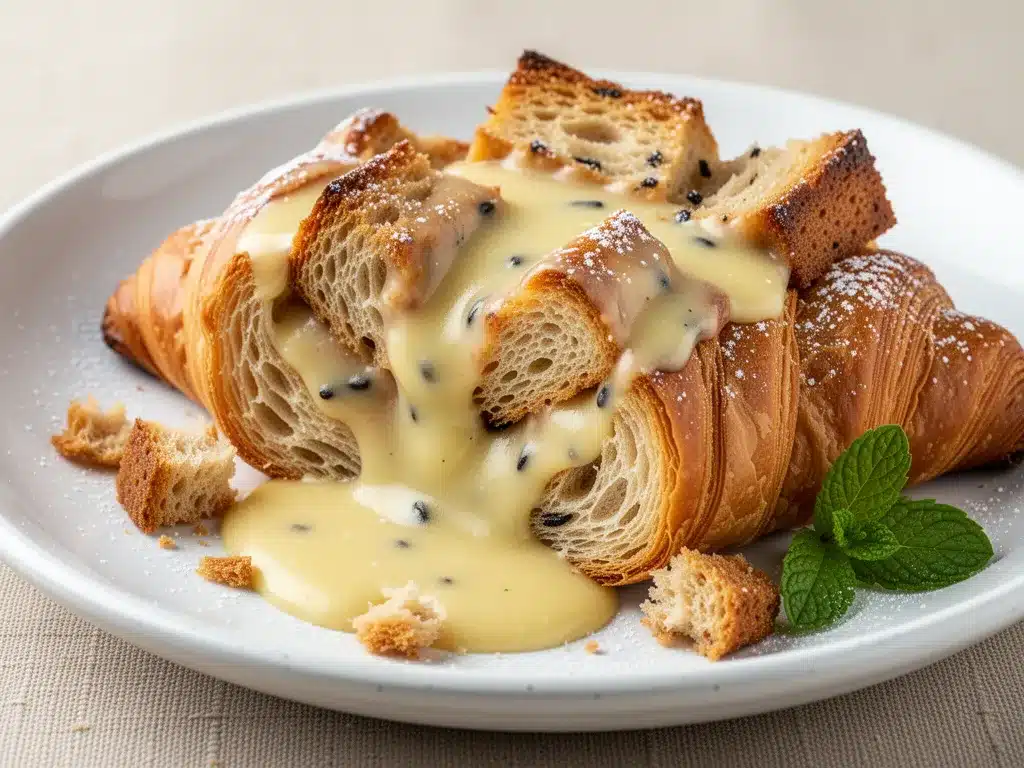
I wasn’t planning to bake. I just wanted to use up the leftovers before they went completely hard. I threw the croissants into a dish, poured over my usual custard mix, and popped it in the oven. When I pulled it out, the kitchen smelled like a high-end French patisserie. The top was golden and crisp, the inside was custardy and soft, and every bite had those glorious, shattering layers of buttery pastry.
My partner walked in, saw what I was making, and asked if I was trying to replace breakfast with dessert. I didn’t answer. I just handed him a warm square. He took one bite, closed his eyes, and said, “Okay, this is the only brunch we’re ever having from now on.”
That was six months ago. Now, whenever I have leftover croissants (and I always do, because they’re too good not to buy), I make this flaky croissant bread pudding. It’s become my go-to lazy brunch, my “I need to impress guests but don’t want to stress” move, and honestly, my favorite way to treat myself on a Sunday morning.
This isn’t your grandma’s bread pudding. That version is usually dense, soggy, and tastes like it was made with sandwich bread. This? This is light. It’s airy. It’s rich without being heavy. And the best part? It’s stupidly easy. You don’t need to be a baker. You just need some stale croissants and a few pantry staples.
Why You’ll Love This Recipe
I’ve tested this recipe about twelve times in the last year. I’ve tried different milks, different sugars, different amounts of cinnamon. Here’s why this specific version keeps me coming back:
Zero Waste Cooking at Its Best — Let’s be real: throwing away perfectly good food feels bad. This recipe turns “trash” into a gourmet experience. Those sad, hard croissants? They’re actually better for this than fresh ones. They soak up the custard like a sponge without falling apart.
It’s Basically Set-It-And-Forget-It — I love recipes where I can prep the night before. You can assemble this flaky croissant bread pudding, cover it, and put it in the fridge overnight. In the morning, you just pull it out and bake it. That means you get to sleep in while the house fills with that incredible smell. No standing over a stove. No panic.
The Texture is Unbeatable — Bread pudding made with regular bread gets mushy. Croissants stay flaky. The layers separate just enough in the custard to give you that buttery, airy mouthfeel. It’s crispy on top, soft in the middle, and somehow still has structure. It’s culinary magic.
It Feels Fancy but Costs Pennies — If you went to a brunch spot and ordered a slice of croissant bread pudding, you’d pay $12. This costs about $3 to make because you’re using leftover pastries. It feels indulgent, but it’s actually budget-friendly.
It’s Customizable — Want chocolate chips? Throw them in. Want bourbon? Add a splash. Want it healthier? Swap the sugar for maple syrup. The base recipe is forgiving, so you can make it your own.
Ingredients You’ll Need
Here’s the thing about this recipe: you probably have most of it in your kitchen already. I’m not asking you to buy exotic ingredients. Just grab those sad croissants and assemble.
The Star:
Croissants (6-8 large, or about 1 pound / 450g) — This is the most important part. They need to be stale. If they’re fresh, leave them out on the counter overnight to dry out. If they’re already hard, perfect. I use plain butter croissants, but you can use almond or chocolate croissants too (just adjust the sugar in the custard). Tear them into rough chunks—don’t slice them. Tearing creates more surface area for the custard to soak into.
The Custard Base:
Whole Milk (2 cups / 480ml) — Use whole milk for the richest texture. If you’re trying to lighten it up, you can use 2%, but it won’t be as creamy. I’ve tried skim milk, and it just tastes watery. Don’t bother.
Heavy Cream (1 cup / 240ml) — This gives it that luxurious, cafe-quality richness. If you want a lighter version, you can swap half the cream for more milk, but I think the fat content is worth it for a brunch treat.
Large Eggs (4 large) — Room temperature eggs mix better into the custard. If you’re in a rush, crack them into a measuring cup and let them sit for 10 minutes. Cold eggs can sometimes curdle the milk if you’re not careful.
Granulated Sugar (½ cup / 100g) — This balances the richness of the cream. If you’re using chocolate or sweetened croissants, reduce this to ¼ cup. Taste your croissants first!
Pure Vanilla Extract (2 teaspoons) — Don’t skip this. It adds depth. Use real vanilla, not imitation. It makes a noticeable difference in a recipe with so few ingredients.
Ground Cinnamon (1 teaspoon) — Warm, cozy spice. If you don’t like cinnamon, you can skip it, but I think it pairs perfectly with the buttery pastry.
Pinch of Salt — Just a pinch. It enhances the sweetness and brings out the flavor of the vanilla. Never underestimate the power of salt in dessert.
For the Topping (Optional but Recommended):
Extra Sugar (2 tablespoons) — Sprinkle this on top before baking. It creates that crunchy, caramelized crust that makes people lose their minds.
Butter (1 tablespoon, melted) — Brush this over the top before baking for extra golden color and flavor.
Equipment Needed
You don’t need fancy gadgets. Here’s what I actually use:
9×13 Inch Baking Dish — A standard glass or ceramic baking dish works best. I use Pyrex because I can see the bottom browning. Metal pans work too, but they might brown faster, so keep an eye on it.
Mixing Bowl — Something large enough to whisk all the custard ingredients together comfortably. A 4-quart bowl is perfect.
Whisk — A regular wire whisk is fine. You don’t need an electric mixer. Just whisk until the sugar is dissolved and the eggs are fully incorporated.
Spatula — A silicone spatula helps scrape the bowl clean and ensures you get all that delicious custard.
Aluminum Foil — You’ll need this to cover the dish if the top starts browning too quickly. I usually tent it halfway through baking.
How to Make It: Step-by-Step
Alright, let’s make this! I’m walking you through exactly how I do it, including the little tricks I’ve picked up over time.
Step 1: Prep the Croissants (5 minutes)
Start by tearing your stale croissants into rough, bite-sized pieces. Don’t worry about making them uniform. Tearing is better than cutting because it creates jagged edges that soak up custard better. Place the pieces into your 9×13 baking dish. Try to arrange them in a single layer if possible, but it’s okay if they overlap a bit. You want them to fill the dish, but not be packed tight like a suitcase.
Step 2: Make the Custard (5 minutes)
In your large mixing bowl, whisk together the eggs, sugar, vanilla, cinnamon, and salt. Whisk vigorously for about a minute until the sugar is mostly dissolved and the mixture is smooth. Then, slowly pour in the milk and heavy cream while whisking constantly. You want a smooth, homogeneous liquid. If there are little white bits of egg white, that’s fine, but try to get it as smooth as possible.
Step 3: Combine and Soak (10-15 minutes)
Pour the custard evenly over the croissants. Use your spatula or hands to gently press the pastry down into the liquid. You want every piece to get wet. If some pieces are sticking out above the liquid, press them down. Let it sit for at least 10 minutes. This is the most important step. The croissants need time to absorb the custard. If you bake it immediately, you’ll get dry patches. If you let it soak, you get that uniform, pudding-like texture. I usually soak it for 20 minutes while I make coffee.
Step 4: The Optional Soak (Overnight)
If you’re planning to make this ahead, cover the dish tightly with plastic wrap and refrigerate it overnight. This extends the soaking time and lets the flavors meld. In the morning, just take it out and let it sit on the counter for 15 minutes while the oven preheats. This step is optional but highly recommended for ease.
Step 5: Bake (45-50 minutes)
Preheat your oven to 350°F (175°C). If you haven’t already, sprinkle the extra sugar on top and drizzle with melted butter. Place the dish in the oven and bake for 45-50 minutes. Halfway through (around 25 minutes), check the top. If it’s getting too dark, tent it loosely with aluminum foil. The bread pudding is done when the center is set (it shouldn’t jiggle like Jell-O) and the top is golden brown and puffed.
Step 6: Cool and Serve (10 minutes)
Let it cool for 10 minutes before serving. I know this is hard, but if you cut into it immediately, the custard will run out. Letting it rest allows it to set slightly and makes for cleaner slices. Serve warm. This is best enjoyed the same day.
Expert Tips & Tricks
Here’s everything I’ve learned from making this dozens of times. These tips will save you from my mistakes.
Stale is Better — Fresh croissants will turn to mush. Stale croissants hold their structure. If you buy fresh ones, leave them out uncovered on the counter for 24 hours. Or, bake them at 300°F for 10 minutes to dry them out, then let them cool.
Don’t Skimp on the Soak — I’ve rushed this step before, and the result was dry, eggy patches. Give it 15-20 minutes minimum. If you’re in a hurry, you can microwave the croissants with the custard for 30 seconds to speed up absorption, but the texture isn’t quite as good.
Check for Doneness — The center should be just set. It will still be slightly soft, but not liquid. If you insert a knife and it comes out clean, it’s done. If it comes out wet with raw egg, bake for another 5-10 minutes.
Storage Note — This tastes best fresh. Leftovers can be stored in the fridge for up to 3 days. Reheat in the oven at 350°F for 10-15 minutes to crisp up the top. The microwave works in a pinch, but it makes the pastry soggy.
Variations & Substitutions
Once you’ve nailed the basic version, here’s how you can mix it up. I’ve tried all of these.
Chocolate Croissant Bread Pudding — Use chocolate croissants (pain au chocolat) and add ½ cup of chocolate chips to the custard. Reduce the sugar to ¼ cup because the croissants are already sweet.
Bourbon Pecan — Add 2 tablespoons of bourbon to the custard and 1 cup of chopped pecans on top. This gives it a Southern twist. The alcohol cooks off, leaving just the flavor.
Berry Burst — Toss 1 cup of fresh or frozen berries (blueberries, raspberries, or blackberries) into the dish before pouring the custard. The berries burst and create pockets of fruitiness. Add 1 teaspoon of lemon zest to brighten it up.
Gluten-Free — Use gluten-free croissants. The technique is the same, but GF pastry can be more delicate, so handle it gently when soaking.
Dairy-Free — Use oat milk or coconut milk instead of dairy milk and cream. Use dairy-free butter for the topping. It’s still delicious, just slightly less rich.
Serving & Storage
I usually serve this straight from the baking dish at the brunch table—it looks rustic and stays warm. But here are other ways I’ve enjoyed it:
Side Dishes: This is rich, so it pairs well with lighter sides. A simple green salad with vinaigrette cuts through the richness. Or serve it with fresh fruit. If you’re having a full brunch, it goes great with cottage cheese egg bake for a protein boost.
Toppings Bar: Put out whipped cream, powdered sugar, fresh berries, and maple syrup. Let everyone customize their slice.
Storage: Store leftovers in an airtight container in the fridge for up to 3 days. Reheat in the oven for best texture. Do not freeze this recipe. The custard separates when frozen and thawed, and the pastry becomes rubbery. It’s best made fresh.
Nutrition Information
I’m not a nutritionist, but here’s the breakdown if you’re tracking. This is a rich dessert, so portion control is key.
Per Serving (based on 9 servings):
- Calories: 380
- Protein: 8g
- Carbs: 32g
- Fiber: 1g
- Sugar: 18g
- Fat: 22g
- Saturated Fat: 12g
- Cholesterol: 110mg
- Sodium: 280mg
What’s Good: It’s a good source of calcium from the dairy. The eggs provide protein.
What to Know: It’s high in calories and saturated fat due to the cream and butter. Use it as an occasional treat, not a daily staple.
My Take: Look, this is brunch dessert. It’s meant to be enjoyed. Don’t stress the numbers. Enjoy a square, share with friends, and savor the flaky, custardy goodness.
Final Thoughts
So that’s my go-to flaky croissant bread pudding! I’ve probably talked your ear off at this point, but when you make a recipe this often, you have a lot to say about it.
This has saved me from waste, impressed my guests, and given me the best lazy brunches. It’s my answer to “what’s for dessert” when I want something special but don’t want to spend hours baking. My family is happy, my guests are happy, and I’m happy because I’m not stressed about cooking.
Make it yours! Try different add-ins, swap in your favorite fruits, or experiment with spices. The best recipes are the ones you adapt to your family’s tastes. If you make this, drop a comment and let me know what you think! I love hearing how recipes turn out in your kitchen. And if something doesn’t work, tell me that too—I’m here to help troubleshoot.
Happy cooking! And I hope your kitchen smells half as good as mine does right now.
Frequently Asked Questions
Can I use fresh croissants?
You can, but they’ll absorb the custard very quickly and might turn mushy. If you use fresh croissants, tear them, let them sit with the custard for only 5-10 minutes, and bake immediately. Stale croissants are definitely better because they hold their structure better.
Can I make this ahead of time?
Yes! This is actually best made ahead. Assemble it the night before, cover it, and refrigerate overnight. In the morning, just bake it as directed. This saves you time and lets the flavors meld.
Why did my bread pudding turn out soggy?
Usually, this means it wasn’t baked long enough. The center needs to be set, not jiggly. Also, if you didn’t let it soak long enough, the bottom might not have absorbed the liquid properly. Try baking for 5-10 minutes longer next time.
Can I freeze this?
I don’t recommend freezing bread pudding. The custard separates when thawed, and the texture becomes grainy. It’s best eaten fresh or stored in the fridge for a few days.
Can I use almond milk instead of dairy?
You can, but the result will be less rich. Use full-fat oat milk or coconut milk for the closest texture to dairy cream. Almond milk is thinner and might make the pudding less creamy.
How do I know when it’s done?
Insert a knife into the center. If it comes out clean, it’s done. The top should be golden brown, and the pudding should be puffed. It will firm up more as it cools.
Can I add alcohol?
Yes! Add 2-3 tablespoons of bourbon, rum, or amaretto to the custard mixture. It adds a wonderful depth of flavor. The alcohol will cook off during baking, leaving just the taste.
Pin This Recipe!


Flaky Croissant Bread Pudding: Easy Brunch Dessert
- Total Time: 1 hour 5 minutes
- Yield: 9 servings 1x
Description
A rich, custardy, and flaky bread pudding made with stale croissants, featuring a golden caramelized top and a soft, airy interior. This easy, set-it-and-forget-it recipe is perfect for brunch or dessert.
Ingredients
- 6–8 large stale croissants (about 1 pound / 450g), torn into rough chunks
- 2 cups whole milk
- 1 cup heavy cream
- 4 large eggs, room temperature
- ½ cup granulated sugar
- 2 teaspoons pure vanilla extract
- 1 teaspoon ground cinnamon
- Pinch of salt
- 2 tablespoons extra sugar (for topping)
- 1 tablespoon butter, melted (for topping)
Instructions
- Preheat oven to 350°F (175°C).
- Tear stale croissants into rough, bite-sized pieces and place them into a 9×13 inch baking dish.
- In a large mixing bowl, whisk together eggs, sugar, vanilla, cinnamon, and salt until smooth.
- Slowly pour in milk and heavy cream while whisking constantly until the mixture is homogeneous.
- Pour the custard evenly over the croissants. Gently press the pastry down into the liquid to ensure every piece is soaked.
- Let the mixture sit for at least 10-20 minutes to allow the croissants to absorb the custard (or refrigerate overnight).
- Sprinkle extra sugar on top and drizzle with melted butter.
- Bake for 45-50 minutes. Halfway through, tent with aluminum foil if the top is browning too quickly.
- The pudding is done when the center is set and not jiggly, and the top is golden brown.
- Let cool for 10 minutes before serving to allow the custard to set.
Notes
Stale croissants are essential for the best texture; fresh ones may turn mushy. If using fresh croissants, let them dry out overnight or bake at 300°F for 10 minutes. Do not freeze this recipe as the custard separates upon thawing. Leftovers can be stored in the fridge for up to 3 days and reheated in the oven.
- Prep Time: 15 minutes
- Cook Time: 45-50 minutes
- Category: Dessert
- Cuisine: French
Nutrition
- Serving Size: 1 square slice
- Calories: 380
- Sugar: 18
- Sodium: 280
- Fat: 22
- Saturated Fat: 12
- Carbohydrates: 32
- Fiber: 1
- Protein: 8
Keywords: croissant bread pudding, brunch dessert, stale croissants recipe, easy bread pudding, custard dessert, zero waste cooking


